Lead workspace
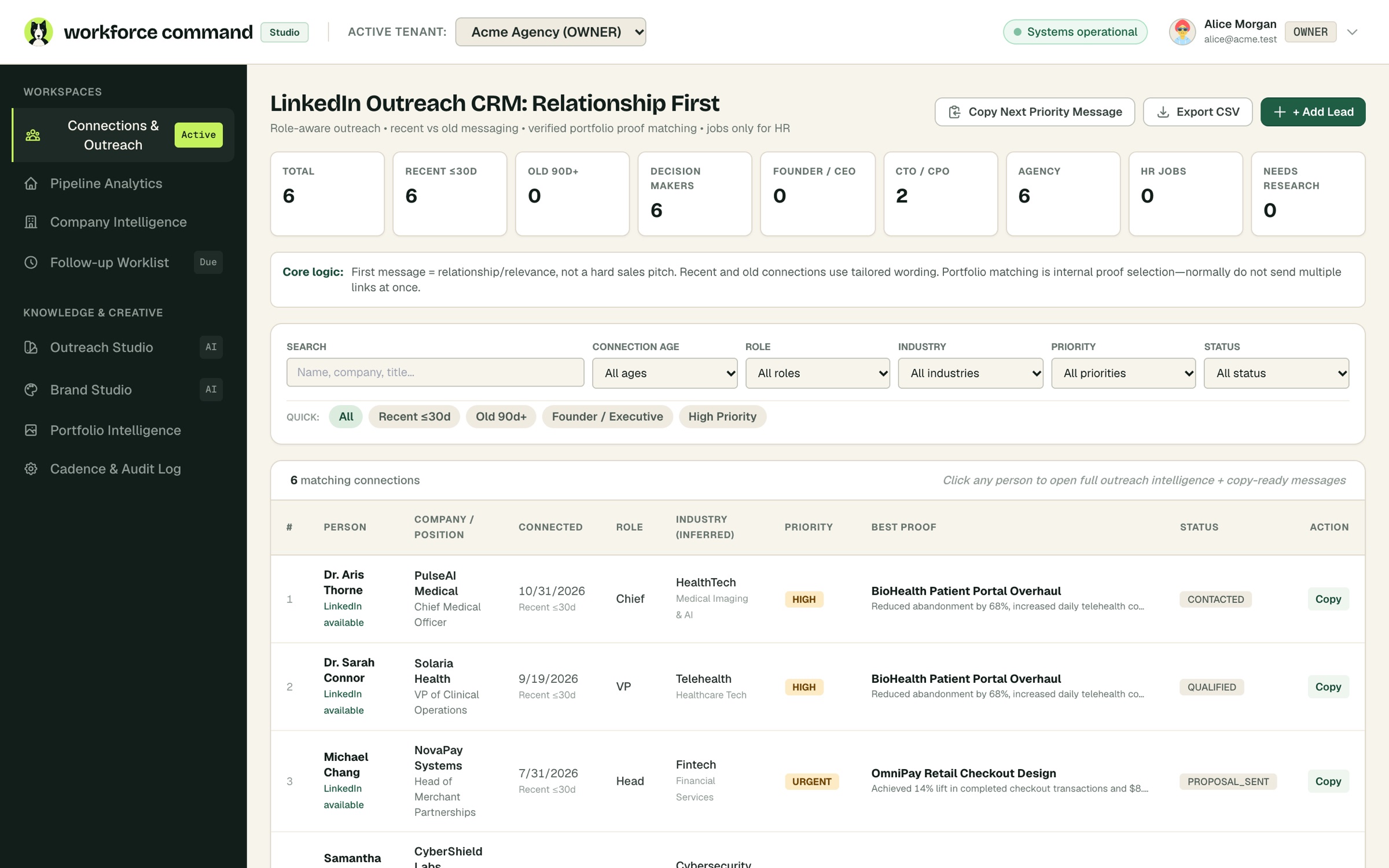
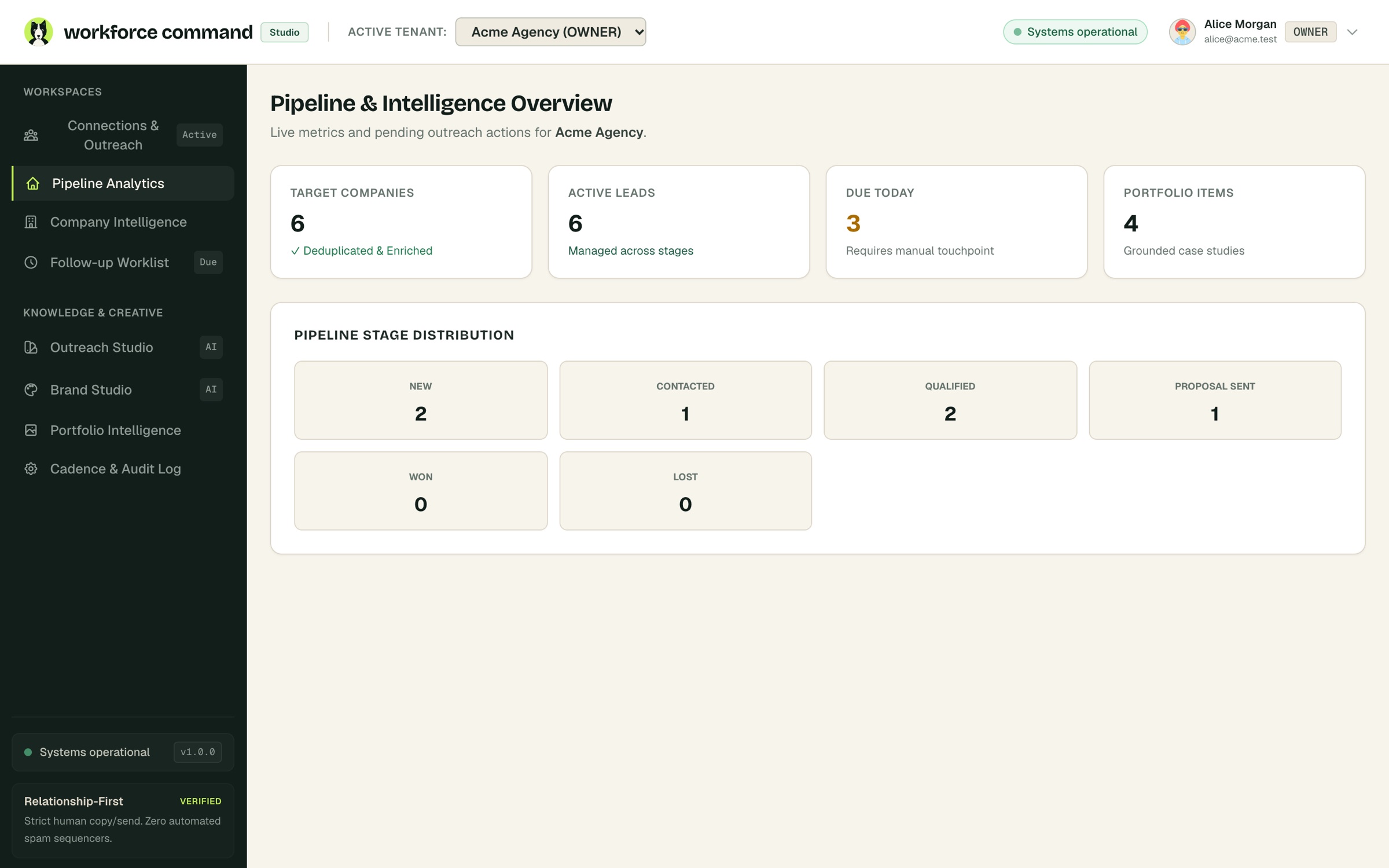
Connections filtered by age, role, industry and priority, each with the best-matching portfolio proof and a status from new to won.
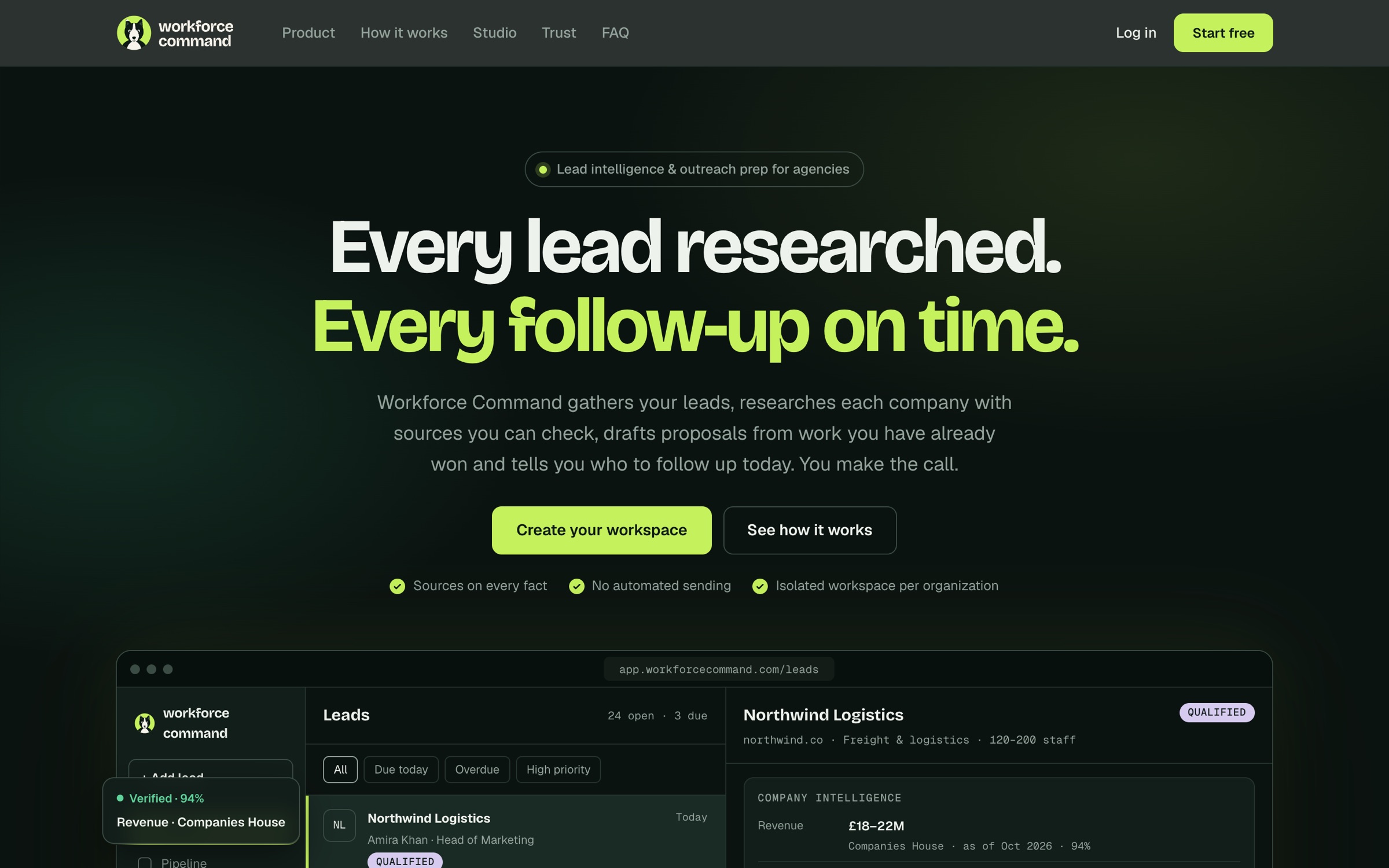
A lead-generation workspace for agencies. It researches each company with sources you can check, drafts proposals from work you have already won and tells you who to follow up with today — and never sends a message on its own.
Agencies usually find leads in one tool, research them in browser tabs, write pitches in a doc and track follow-ups in a spreadsheet. Workforce Command puts that in one workspace built for relationship-first outreach: every company fact carries its source and date, proposals are grounded in the agency’s real case studies, and a person copies and sends every message.
Connections filtered by age, role, industry and priority, each with the best-matching portfolio proof and a status from new to won.
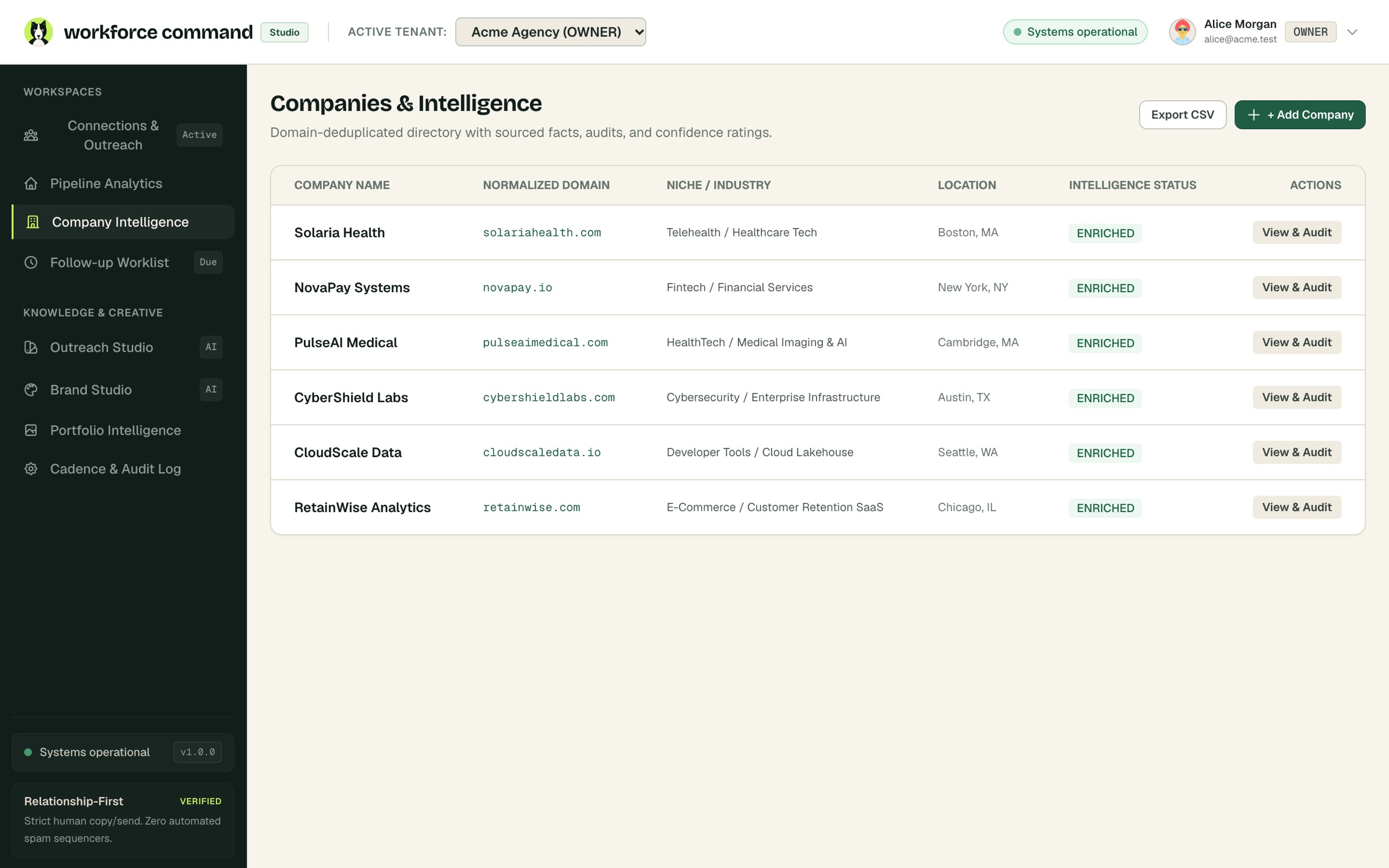
A directory de-duplicated by domain, with enriched facts shown alongside their source, confidence and as-of date, plus website audits for SEO, UX and speed.
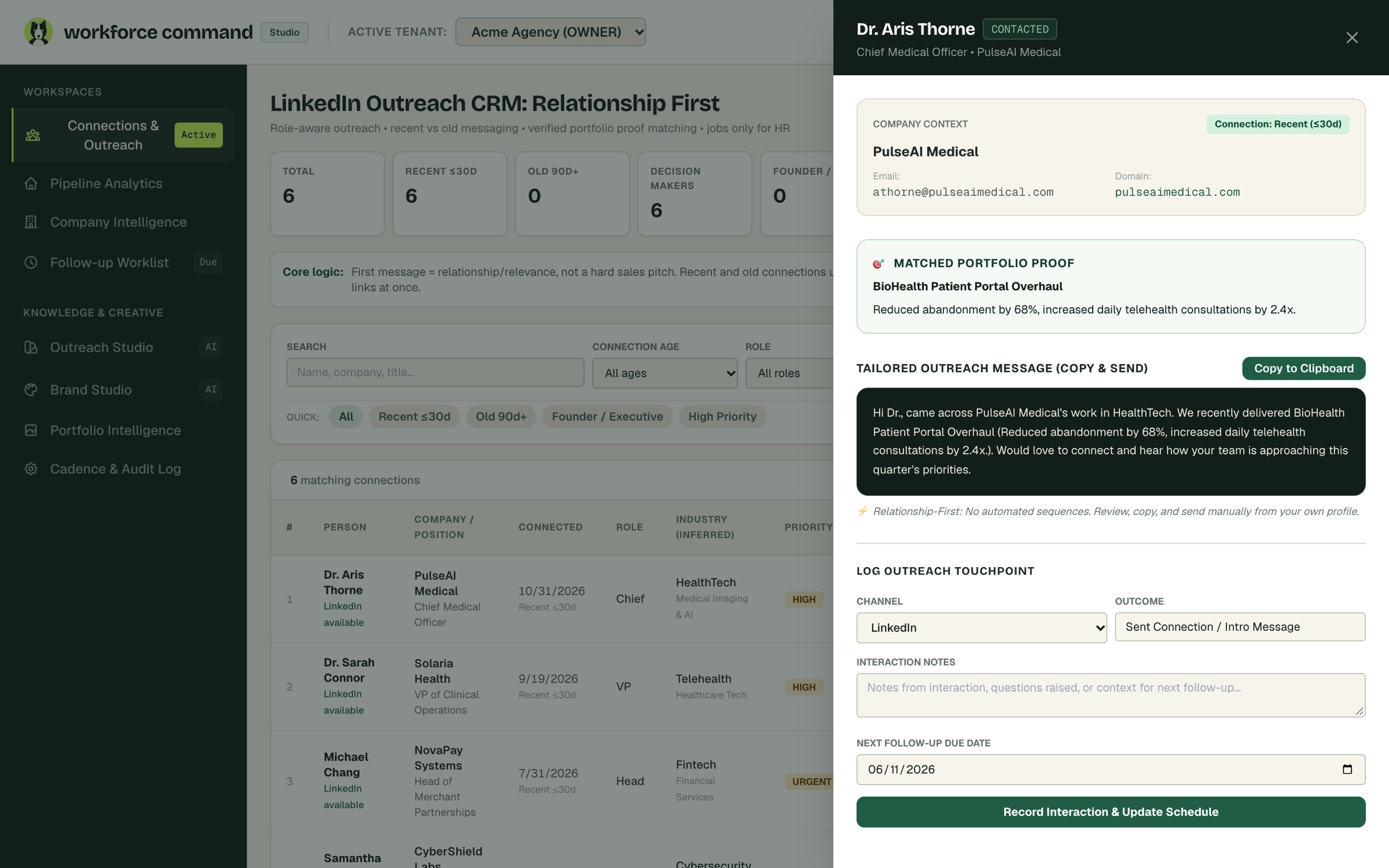
Open a lead to get a tailored message built from matched work, then log the touchpoint and set the next follow-up date in the same drawer.
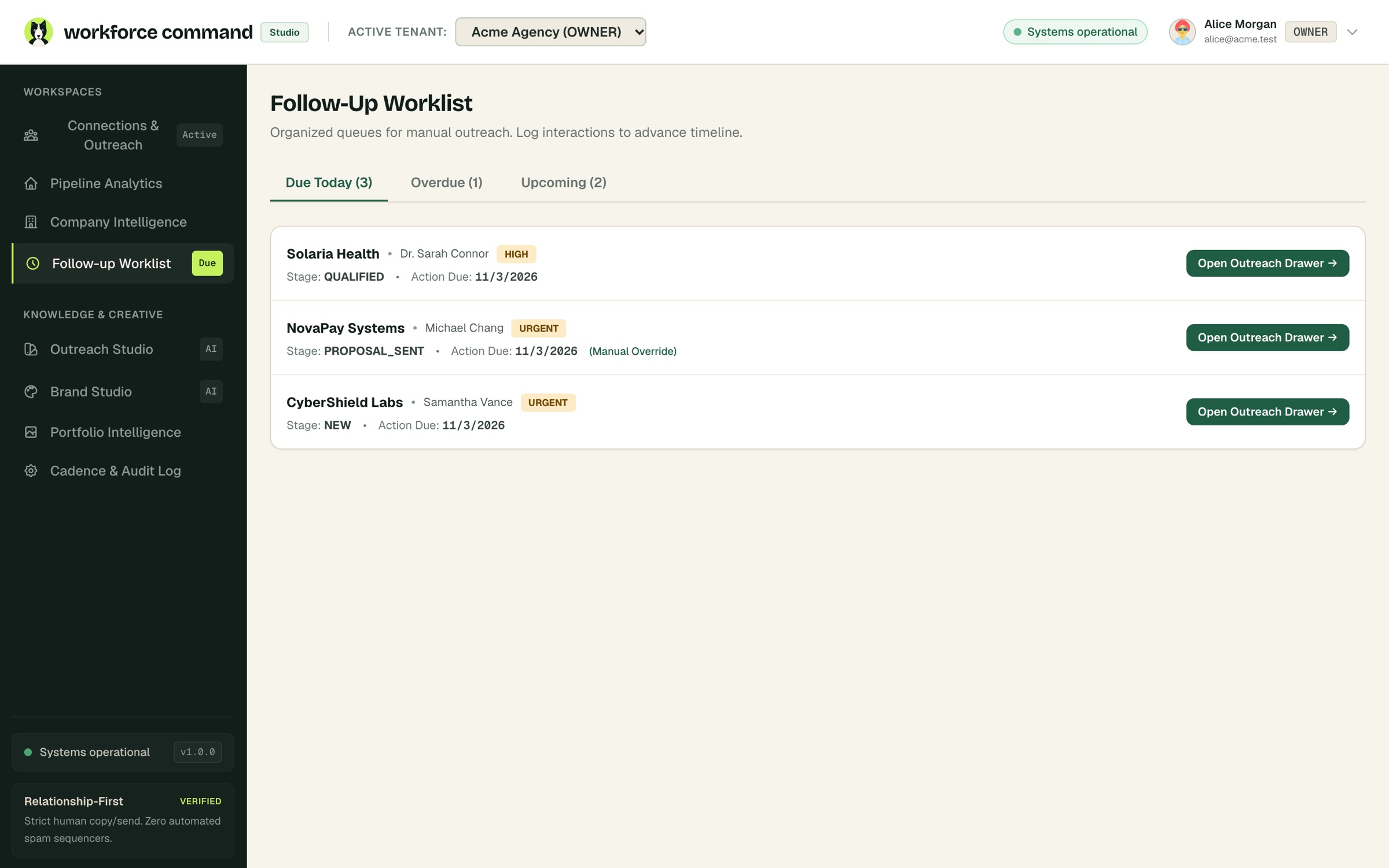
Due today, overdue and upcoming queues driven by a configurable cadence, with manual overrides that stick.
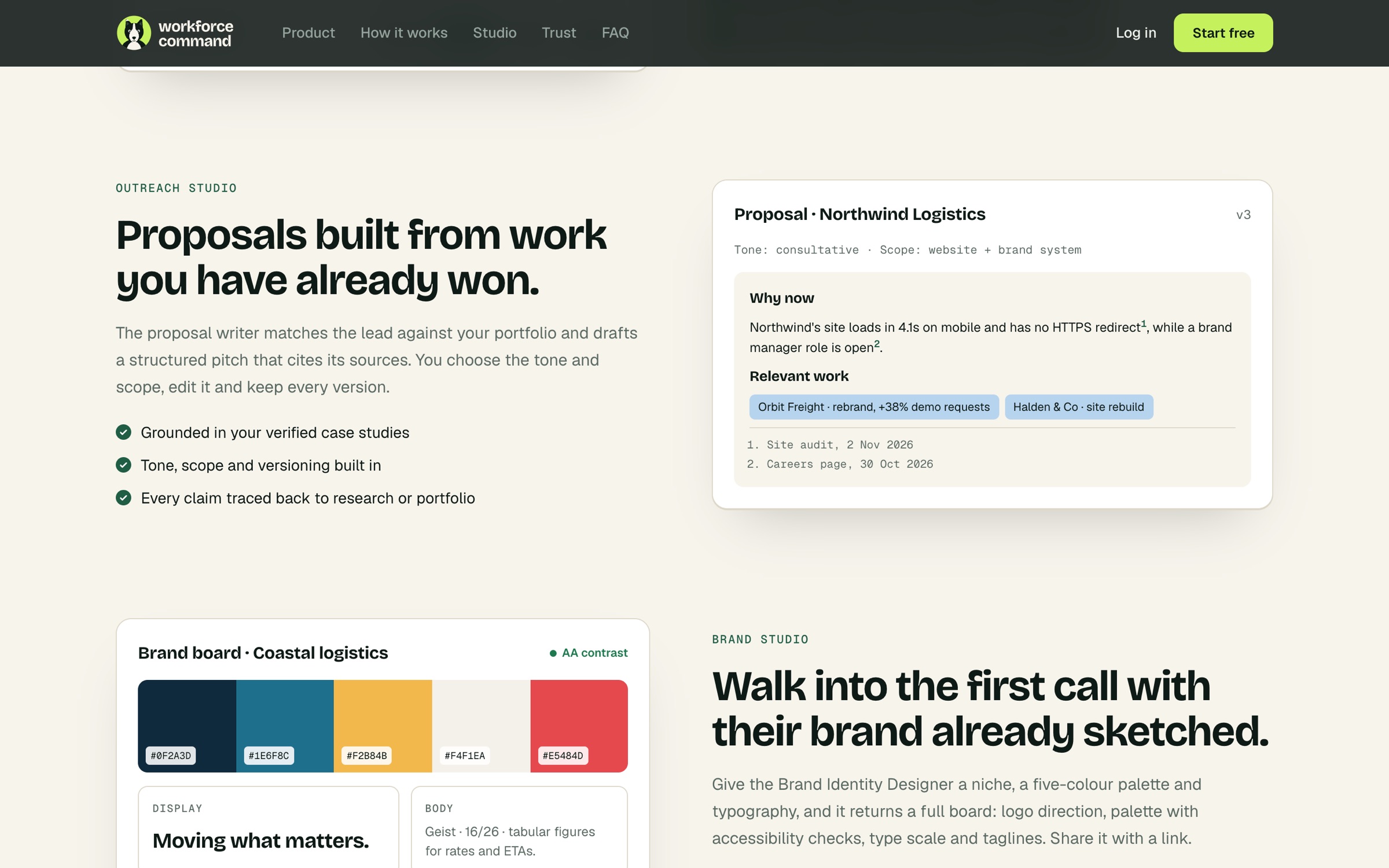
AI drafts proposals that cite their sources, builds brand boards from a niche, palette and typeface, and recommends type pairings for the client’s industry.
Each agency’s data stays in its own organisation, with roles, an audit log and CSV or JSON export.
The API runs on Node’s built-in HTTP server and the MongoDB driver with almost no other dependencies, which keeps it small and every route explicit.
Every request resolves to a user’s membership in one organisation, data is indexed per organisation and companies are de-duplicated by domain within it. Dedicated tests check one agency can never read another’s data.
Cookie sessions with CSRF checks, rate-limited sign-in and rotating refresh tokens that shut down the whole session if an old token is ever reused.
Six AI modules, from proposals and brand boards to website audits and portfolio matching, go through one gateway that can switch between hosted providers and a local model.
Model output is parsed and checked for its required fields. If a provider fails, a rule-based generator answers instead and the result is labelled as a demo, never passed off as AI.
Brand boards calculate WCAG contrast ratios from the palette in code instead of asking the model, so the accessibility notes are always accurate.